

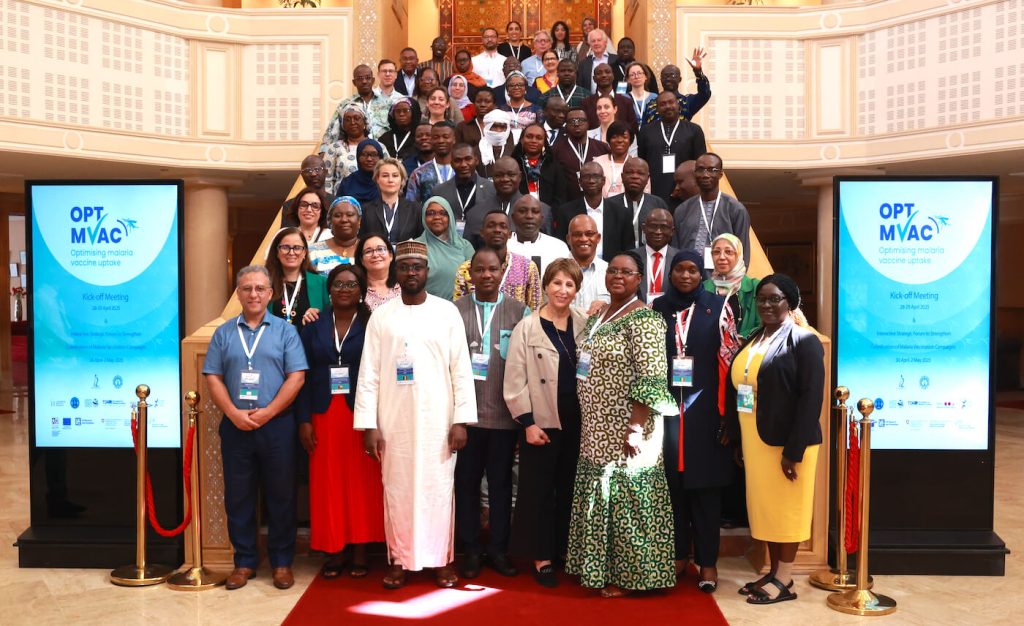
The Optimising malaria vaccine uptake (OPT-MVAC) consortium held its project kick-off meeting from 28 April to 2 May 2025 in Rabat, Morocco. Hosted by the Rabat Collaborating Centre (RCC), which leads OPT-MVAC’s work package on safety and pharmacovigilance, the meeting provided a forum for partners to meet in person and take part in refresher training to strengthen pharmacovigilance. The aim was to ensure this critical component remains a priority when launching and implementing new vaccination strategies, such as the malaria vaccine.
The event brought together participants from the national immunisation, malaria control and pharmacovigilance programmes of OPT-MVAC partner countries, as well as institutional partners, invited experts and moderators. Over five days, participants aligned on project activities and objectives, shared the status of their countries’ malaria vaccine introduction and implementation journeys and took part in training activities, including simulations and group work designed for practical, hands-on learning and collaboration.
A strong focus on safety and coordination
As the OPT-MVAC project supports implementation research led by national immunisation, malaria control and pharmacovigilance programmes, the kick-off meeting placed strong emphasis on improving coordination between these programmes to enhance the safety and effectiveness of malaria vaccination campaigns.
Training sessions covered WHO guidance on vaccine safety, adverse event reporting, crisis management and risk communication. Country experiences – including Benin’s coordination model, Morocco’s approach to COVID-19 vaccine surveillance and Ghana and Burkina Faso’s use of Vigiflow – highlighted good practices that can inform malaria vaccine rollout. Participants were also invited to draft national action plans to strengthen coordination and reporting systems.
Building confidence through collaboration
Robust pharmacovigilance systems are vital to protecting patients, building public confidence and guiding evidence-based policy. The meeting underscored the importance of collaboration, capacity building and resource optimisation to confirm the safety of vaccines and ensure the success of malaria vaccination across the region.
By the week’s end, countries had identified priorities for improving surveillance and data sharing and had laid the groundwork for ongoing cooperation, including through the consortium’s new regional vaccine safety subgroup (ReSaG) – an important step towards safe and effective malaria vaccine implementation across the OPT-MVAC network and beyond.