


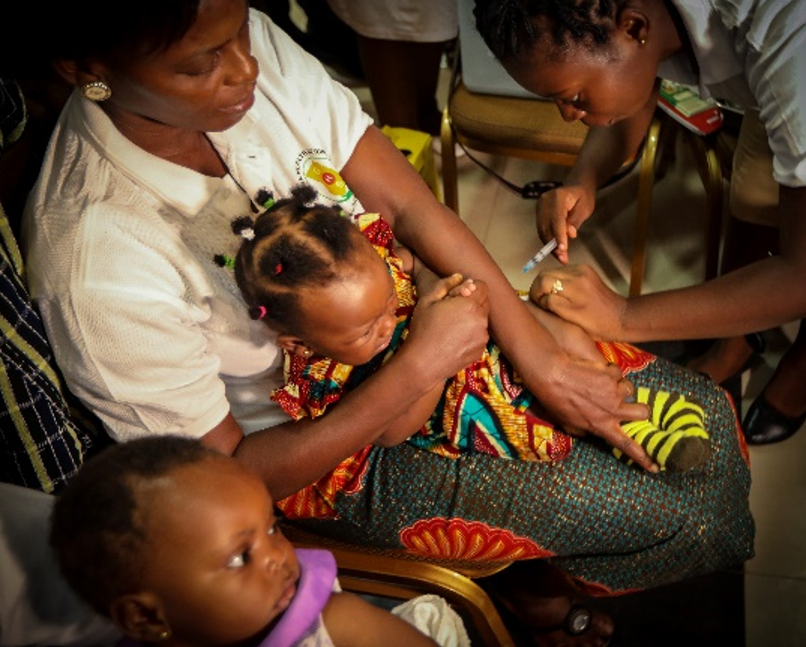
For decades, malaria has been one of Africa’s most persistent health challenges. In Ghana, it was once the leading cause of death for children under five. Bed nets and antimalarial drugs reduced deaths substantially, but by the mid-2010s, the pace of improvement had declined.
Climate change was altering the length and intensity of transmission seasons. Resistance to the insecticides used on bed nets and to the drugs used to treat infection was spreading. The tools that had driven earlier progress were becoming less reliable.
Then, between 2019 and 2024, under‑five malaria deaths fell by 86%. This did not happen by chance.
With strong support from government, local leaders and technical partners, and a willingness to learn and adapt to changing needs, Ghana is showing that sustaining impact is possible.
Three things drove the decline in Ghana’s under-five malaria deaths: redesigning vaccine delivery around the needs of families in high-burden areas, activating trusted voices to counter misinformation at every level, and layering the vaccine with other proven tools rather than treating it as a standalone solution.
Together, these approaches offer a practical model for how African countries can protect millions of children from malaria. However, across sub-Saharan Africa, progress against malaria is under threat as shrinking development budgets put life-saving programmes at risk.
Read the full article in Health Policy Watch.