


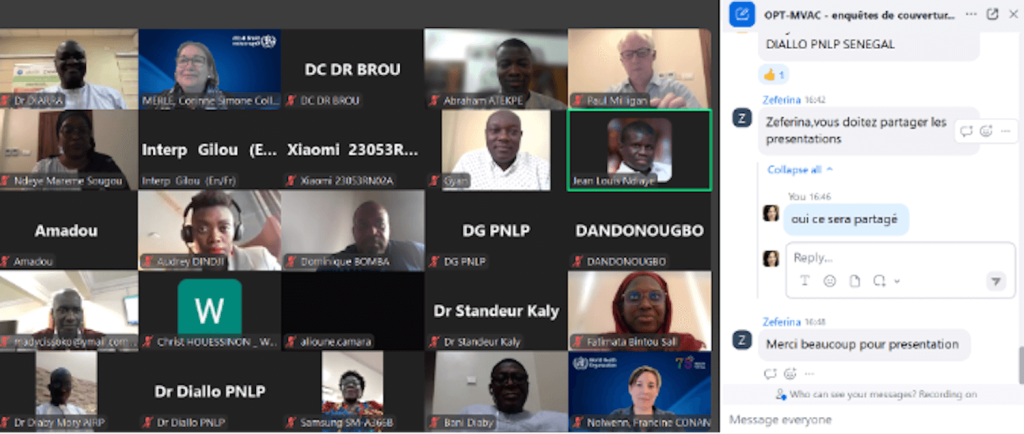
The Optimising malaria vaccine uptake (OPT-MVAC) consortium hosted a technical webinar in August 2025 focused on how household coverage surveys can support implementation research and help countries optimise delivery and uptake of malaria vaccines and strengthen the delivery of other vaccines in their national Expanded Programme on Immunisation (EPI) schedule and related health interventions. The session brought together national programme teams and institutional consortium partners for practical discussions on methods, tools and timelines, with several partner-country and institutional speakers.
Why coverage surveys matter
Administrative data are essential for routine monitoring, but they can mask gaps caused by uncertain target population estimates or reporting challenges. Well-designed household coverage surveys provide more reliable national and sub-national estimates; identify barriers and facilitators to vaccine uptake; reveal equity gaps and missed opportunities; evaluate the effectiveness of delivery strategies (e.g., outreach, communication, supply chain); and generate quality evidence for informed policy or programmatic decisions to improve implementation.
Introducing the OPT-MVAC research toolkit
Presentations walked participants through a standardised survey approach and shared lessons from previous work. A general OPT-MVAC-adapted research toolkit was introduced, aligned with WHO’s 2018 Vaccination Coverage Cluster Survey guidance. This toolkit includes a generic protocol, generic verbal and written consent forms, and generic household and individual questionnaires, along with guidance on cluster sampling methodology and field procedures, and practical job aids for training, callbacks and supervision. It also clarifies ethical requirements, data protection and country ownership of survey data.
Lessons learned from Ghana’s malaria vaccine experience
As one of the first countries to introduce the malaria vaccine, Ghana shared its experience from household surveys conducted during its RTS,S pilot, illustrating how survey results can track uptake across doses, assess timeliness and inform corrective action when coverage tails off for later doses.
Participants also discussed the optimal timing to schedule surveys after vaccine introduction. The consensus was to allow sufficient time to establish an eligible cohort from the date of malaria vaccine introduction, with many programmes aiming for approximately 18 months post-introduction to balance timeliness and robustness.
Planning survey timing and next steps
The webinar’s Q&A session underscored the need for pragmatic planning
- Integrating malaria vaccine modules into broader immunisation coverage surveys where feasible.
- Using administrative data to target survey efforts to districts with likely gaps.
- Pairing quantitative surveys with qualitative enquiry to understand barriers and guide solutions.
- Beginning protocol adaptation, ethics submissions and logistics early.
By enhancing the design and use of coverage surveys, OPT-MVAC partners aim to generate comparable evidence that supports confident decision-making and ultimately improves malaria vaccine uptake.
In terms of next steps, consortium partners have circulated the OPT-MVAC research toolkit to all partner countries, are conducting bilateral working sessions to tailor protocols and timelines to each country and are launching a short needs assessment questionnaire to shape upcoming research capacity-strengthening webinars.